Codex CLI vs Claude Code: Terminal AI Coding Compared
Compare Codex CLI vs Claude Code for terminal AI coding: model access, MCP, security, token costs, and connecting both to OurToken's multi-model API.
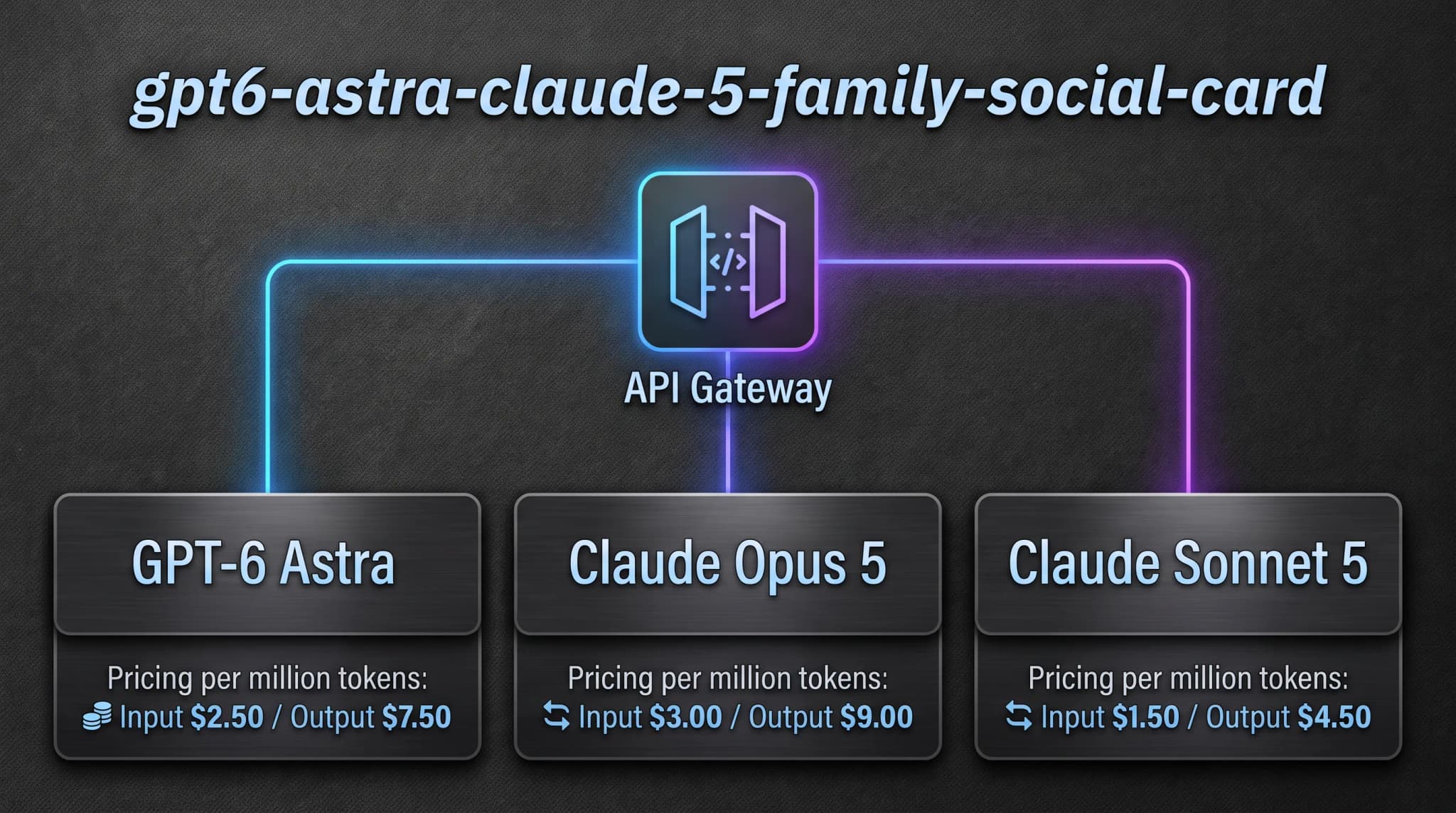
The codex cli vs claude code question is not about picking a winner. Both
tools run in a terminal, read a repository, edit files, run commands, and
connect to external tools through the Model Context Protocol (MCP). The useful
comparison is about the choices your team makes after installation: which
models the agent can reach, how credentials are configured, what a token-heavy
agent loop costs, and how much control your security policy keeps.
Codex CLI is OpenAI's terminal coding agent. Its default model family is the GPT-5.6 line plus GPT-6 Astra, and it can be pointed at any provider that speaks the Responses wire format. Claude Code is Anthropic's terminal coding agent, built around Claude models, and it accepts an Anthropic-compatible base URL and token. Both tools can use the same OurToken key when their request shapes are configured correctly.
This guide compares them on architecture, configuration, security, MCP integration, and cost. It includes runnable examples, a token-cost calculator, and a mixed workflow that uses each agent where it is strongest.
Verification status: Model IDs, endpoint paths, and prices below were checked against live OurToken model pages on 2026-09-15. OpenAI-family prices are 20% of the official comparison prices shown on those pages; Claude 5 prices are 40%. Product defaults change, so confirm the current Codex CLI and Claude Code documentation before writing team runbooks.
Codex CLI vs Claude Code: Where Each Tool Excels
A fair comparison starts with the job to be done, not with a feature checklist. Codex CLI and Claude Code both use the same MCP protocol and both support approval gates for repository edits and shell commands, but their defaults point in different directions.
| Requirement | Better starting point | Why |
|---|---|---|
| Use OpenAI-family models in a terminal agent | Codex CLI | Its configuration is built around OpenAI-compatible providers |
| Use Claude models in a focused agent workflow | Claude Code | The default product is Claude-centric |
| Point both agents at one multi-model API | Tie | Each accepts custom credentials and a custom base URL |
| Keep one team policy for model routing | Tie | Both benefit from a routing table, not from one fixed model |
| Connect read-only and write MCP tools | Tie | Both implement MCP; safety depends on server permissions |
| Control API billing centrally | Tie | API keys, token caps, and provider routing decide the bill |
| Evaluate custom endpoint behavior | Codex CLI | The Responses API boundary is easier to inspect in a local config |
| Match an existing Claude subscription workflow | Claude Code | Less configuration when Anthropic is already the default |
Codex CLI is the stronger starting point when model choice is part of your infrastructure. You can keep the client stable and change model IDs, base URLs, and providers without changing how the agent plans and edits code. Claude Code is the stronger starting point when the team has already standardized on Claude and wants a dependable agent with fewer provider decisions.
Neither choice is automatically cheaper or more private. Inference is billed by the selected model route, and security is determined by where prompts and code travel, how keys are stored, and what tools the agent may call.
Models and Configuration: The Real Differentiator
The real differentiator is not the command-line ergonomics. It is the model route that sits behind each agent. Codex CLI and Claude Code can operate side by side on one OurToken key, but they use different request shapes.
Codex CLI with an OpenAI-compatible provider
Codex CLI reads provider configuration from ~/.codex/config.toml. The
smallest custom-provider setup on OurToken uses the Responses API:
model = "gpt-5.6-terra"
model_provider = "ourtoken"
model_reasoning_effort = "high"
preferred_auth_method = "apikey"

[model_providers.ourtoken]
base_url = "https://api.ourtoken.ai/v1"
wire_api = "responses"
The matching credential lives in ~/.codex/auth.json:
{
  "OPENAI_API_KEY": "your-ourtoken-api-key"
}
Replace the placeholder with a real key from the
OurToken API Keys page and keep that file out
of version control. After this setup, codex uses
https://api.ourtoken.ai/v1/responses for every request, and the model ID in
config.toml controls the route.
A direct request to the same endpoint is useful for debugging:
curl -sS https://api.ourtoken.ai/v1/responses \
  -H "Content-Type: application/json" \
  -H "Authorization: Bearer $OURTOKEN_API_KEY" \
  -d '{
    "model": "gpt-5.6-terra",
    "input": "Summarize this failing test output in three bullets.",
    "max_output_tokens": 256
  }'
The full provider boundary, including auth file placement and model ID validation, is covered in the Codex CLI custom API guide.
Claude Code with an Anthropic-compatible base URL
Claude Code accepts two environment variables for API-backed deployments:
export ANTHROPIC_BASE_URL="https://api.ourtoken.ai"
export ANTHROPIC_AUTH_TOKEN="your-ourtoken-api-key"
With these variables set, Claude Code sends Messages API requests to
https://api.ourtoken.ai/v1/messages. A settings file can map friendly model
names to exact model IDs such as claude-sonnet-5 and claude-opus-5.
A direct Messages request looks like this:
curl -sS https://api.ourtoken.ai/v1/messages \
  -H "Content-Type: application/json" \
  -H "Authorization: Bearer $OURTOKEN_API_KEY" \
  -d '{
    "model": "claude-sonnet-5",
    "max_tokens": 256,
    "messages": [
      {"role": "user", "content": "Plan a small refactor for this module."}
    ]
  }'
The Claude Code custom API guide explains the settings.json model mapping and common deployment mistakes.
Two request shapes behind one key
This architecture keeps one credential and two adapters:
Developer terminal
        |
        +-- Codex CLI -------- Responses API ------> api.ourtoken.ai/v1/responses
        |       model: gpt-5.6-terra | gpt-6-astra
        |
        +-- Claude Code ------- Messages API ------> api.ourtoken.ai/v1/messages
                model: claude-sonnet-5 | claude-opus-5
The same OurToken key authenticates both paths, but the JSON contract is
different. Codex uses input, while Claude uses messages and requires
max_tokens. Teams that route between the two should keep a small adapter
boundary instead of pretending the request shapes are identical.
Exact model IDs.
Copy model IDs exactly as they appear on the model pages. Display names and catalog paths are not valid request values.
| Tool | Request shape | Endpoint | Example model IDs |
|---|---|---|---|
| Codex CLI | Responses | /v1/responses | gpt-5.6-terra, gpt-6-astra |
| Claude Code | Messages | /v1/messages | claude-sonnet-5, claude-opus-5 |
Model IDs are the most common configuration failure in both tools. A 404 with
model_not_found usually means a display name was used instead of the exact
ID, or the request was sent to the wrong operation path.
Security, MCP, and Team Controls
Both agents support MCP, which means both can call databases, issue trackers, deployment systems, and internal APIs. The interesting question is not whether MCP is supported; it is which tool server the repository can reach and what that server may do.
| Control | Codex CLI | Claude Code |
|---|---|---|
| Default model family | OpenAI GPT models | Claude models |
| Custom API key | ~/.codex/auth.json | ANTHROPIC_AUTH_TOKEN |
| Custom base URL | Provider entry in config.toml | ANTHROPIC_BASE_URL |
| MCP tools | Supported | Supported |
| Command approval | Permission prompts and allowlists | Permission modes and approval prompts |
| Token usage logging | Responses usage object | Messages usage object |
| Provider routing | Change model ID per task or policy | Change model mapping per environment |
The table is not a security scorecard. Both tools are only as safe as the permissions you grant. A useful review covers the same controls for each:
- Which model provider receives source code, prompts, and tool output?
- Which shell commands require human approval?
- Which MCP servers are enabled per repository and per developer?
- Can a write-capable MCP tool mutate production data?
- Where are API keys stored, and how are they rotated?
- Are logs redacting secrets and sensitive source snippets?
Start with read-only tools and restricted shell permissions. Add write access only after the team has a dry-run policy, a review step, and an audit path. MCP server authentication is a separate concern from terminal agent configuration, and both layers need explicit policy.
Codex CLI and Claude Code also need a shared model-routing policy. Without one, a developer can accidentally send a huge repository to a premium model, or a routine rename can consume an expensive frontier context. The LLM model routing guide covers how to make routing rules measurable instead of arbitrary.
Cost Analysis: Token Efficiency vs Reasoning Depth
The most expensive part of a coding agent is usually the model loop, not the client. An agent may send the system prompt, repository context, tool definitions, and conversation history on every turn. A comparison between Codex CLI and Claude Code should therefore be a token-cost comparison first.
The verified OurToken rates below are per million tokens.
| Model | Model ID | Context / max output | Input | Output |
|---|---|---|---|---|
| GPT-5.6 Terra | gpt-5.6-terra | 250K / 128K | $0.40 | $2.40 |
| GPT-6 Astra | gpt-6-astra | 1,050K / 128K | $2.00 | $10.00 |
| Claude Sonnet 5 | claude-sonnet-5 | 1M / 128K | $0.80 | $4.00 |
| Claude Opus 5 | claude-opus-5 | 1M / 128K | $2.00 | $10.00 |
GPT-5.6 Terra is the balanced Codex CLI route, and Claude Sonnet 5 is the balanced Claude Code route. GPT-6 Astra and Opus 5 are escalation routes for large-context or high-difficulty work. These prices make one point clearly: model routing changes the monthly bill more than the choice between terminal clients.
A reproducible task-cost calculator
The formula is the same for every route:
per_request_cost = input_tokens / 1,000,000 x input_rate
                 + output_tokens / 1,000,000 x output_rate
The Python version below turns the monthly scenario into one command:
RATES = {
    "gpt-5.6-terra": (0.40, 2.40),
    "claude-sonnet-5": (0.80, 4.00),
    "claude-opus-5": (2.00, 10.00),
}

def task_cost(model: str, input_tokens: int, output_tokens: int) -> float:
    input_rate, output_rate = RATES[model]
    return (input_tokens * input_rate + output_tokens * output_rate) / 1_000_000

baseline = (
    15_000 * task_cost("claude-sonnet-5", 25_000, 1_500)
    + 5_000 * task_cost("claude-sonnet-5", 50_000, 2_500)
)
routed = (
    15_000 * task_cost("gpt-5.6-terra", 18_000, 3_000)
    + 5_000 * task_cost("claude-sonnet-5", 50_000, 2_500)
)

print(f"All Sonnet 5: ${baseline:,.2f}")
print(f"Routed:       ${routed:,.2f}")
print(f"Savings:      ${baseline - routed:,.2f}")
Running the script prints:
All Sonnet 5: $640.00
Routed:       $466.00
Savings:      $174.00
The baseline uses one Claude route for every task. The routed plan moves simple work to Terra in Codex CLI and keeps complex work on Sonnet 5 in Claude Code.
Monthly scenario: 20,000 agent tasks
A platform team runs 20,000 coding-agent tasks per month. The task mix is representative of maintenance work:
- 15,000 simple tasks: test output summaries, rename operations, small doc edits, and dependency bumps.
- 5,000 complex tasks: cross-package refactors, tricky debugging, and architecture reviews.
The cost table below is fully consistent with the Python calculator.
| Route | Requests | Tokens per request | Per request | Monthly |
|---|---|---|---|---|
| Terra via Codex CLI | 15,000 | 18,000 in / 3,000 out | $0.0144 | $216.00 |
| Sonnet 5 via Claude Code | 5,000 | 50,000 in / 2,500 out | $0.0500 | $250.00 |
| Routed total | 20,000 | — | — | $466.00 |
The all-Sonnet-5 baseline would run every task on Claude Code:
| Route | Requests | Tokens per request | Per request | Monthly |
|---|---|---|---|---|
| Sonnet 5 simple | 15,000 | 25,000 in / 1,500 out | $0.0260 | $390.00 |
| Sonnet 5 complex | 5,000 | 50,000 in / 2,500 out | $0.0500 | $250.00 |
| All Sonnet 5 | 20,000 | — | — | $640.00 |
Routing saves $174.00 per month, about 27%, without changing the complex workload. The real saving can be larger when a team also moves easy classification and search tasks to a cheaper model, but it depends on measured quality. If Terra needs too many manual corrections on simple edits, the saving disappears; the point of the calculator is to make that tradeoff auditable.
The Claude Code API pricing vs subscription guide explains the difference between seat-based and token-based billing, and the OpenCode vs Claude Code comparison covers the open-source alternative when provider flexibility is the top requirement.
Bounded retries and usage logging
Cost control also comes from code. Production integrations should set a timeout, cap retries, and log usage on every response. A compact OpenAI-compatible client for Codex-style routes looks like this:
import os
import time
from openai import APIConnectionError, APIStatusError, APITimeoutError, OpenAI

client = OpenAI(
    api_key=os.environ["OURTOKEN_API_KEY"],
    base_url="https://api.ourtoken.ai/v1",
    timeout=30.0,
    max_retries=2,
)

ROUTE_POLICY = {
    "explain": ("gpt-5.6-terra", 1_000),
    "edit": ("gpt-5.6-terra", 4_000),
    "refactor": ("claude-sonnet-5", 6_000),
    "frontier": ("claude-opus-5", 8_000),
}

def should_retry(exc: object) -> bool:
    if isinstance(exc, (APIConnectionError, APITimeoutError)):
        return True
    if isinstance(exc, APIStatusError):
        return exc.status_code in {408, 409, 425, 429, 500, 502, 503, 504}
    return False

def complete_with_usage(task_class: str, messages: list) -> object:
    model, max_output_tokens = ROUTE_POLICY[task_class]
    for attempt in range(1, 4):
        try:
            response = client.responses.create(
                model=model,
                input=messages,
                max_output_tokens=max_output_tokens,
            )
            print({
                "model": response.model,
                "attempt": attempt,
                "usage": response.usage.model_dump(),
            })
            return response
        except (APIConnectionError, APITimeoutError, APIStatusError) as exc:
            if not should_retry(exc) or attempt == 3:
                raise
            time.sleep(0.5 * (2 ** (attempt - 1)))
    raise RuntimeError("Unreachable: retry loop ended without returning")
The client keeps one API key, one base URL, and a small routing policy. Every successful call logs the model and usage so a monthly cost report can be built from production data instead of estimates. The retry loop re-raises when an error is not retryable or when the attempt limit is reached, so a broken model route cannot silently become an infinite bill.
Real Scenario: A Team Running Both Agents
An eight-person platform team maintains three services and one internal design system. It standardized on Codex CLI for GPT-5.6 Terra work and Claude Code for Claude 5 work. Both agents use the same OurToken key, and both connect to the same MCP servers for docs search, issue lookup, and CI status.
The workflow has four stages:
explain: Codex CLI reads a test failure and summarizes the likely cause.edit: Codex CLI applies small, well-scoped fixes with Terra.refactor: Claude Code plans and executes cross-package changes with Sonnet 5.frontier: Claude Code handles the hardest architecture reviews with Opus 5 only when a reviewer escalates the task.
The team does not ask developers to remember endpoints. A short README says:
Codex CLI uses ~/.codex/config.toml, Claude Code uses
ANTHROPIC_BASE_URL and ANTHROPIC_AUTH_TOKEN, and both should point at the
OurToken-compatible paths shown in this guide. Onboarding therefore takes one
page instead of a provider-specific runbook.
The monthly cost math from the previous section maps directly to this team: 15,000 simple tasks on Terra, 5,000 complex tasks on Sonnet 5, and a small Opus 5 and Astra sample for evaluation. The routed total is $466.00 versus $640.00 for an all-Sonnet-5 baseline. If Opus 5 or Astra is used for more than a small fraction of tasks, the calculator should be rerun with the real mix.
A weekly evaluation holds back 300 tasks and compares schema validity, test pass rate, manual edits, and token cost. The team keeps the routing policy in a reviewed file instead of in individual shell aliases, so a cost or quality regression can be traced to a policy change.
Troubleshooting Both Configurations
Most failures in a Codex CLI or Claude Code setup have a small set of causes. Check these in order before touching repository code.
| Symptom | Likely cause | Fix |
|---|---|---|
| 401 unauthorized | Missing key, wrong key, or auth file not read | Store the OurToken key in auth.json or ANTHROPIC_AUTH_TOKEN |
| 404 not found | Wrong base URL or wrong operation path | Codex uses /v1/responses; Claude uses /v1/messages |
model_not_found | Display name or catalog path used as model ID | Copy gpt-5.6-terra or claude-sonnet-5 exactly |
| Claude Code ignores custom endpoint | Environment variable not exported in the shell | Export ANTHROPIC_BASE_URL and ANTHROPIC_AUTH_TOKEN before launch |
| Codex uses default model | Provider or model name typo in config.toml | Check model_provider matches the [model_providers.*] section |
| Output stops early | Reasoning tokens consume the output budget | Raise max_output_tokens or lower reasoning effort where supported |
| Unexpected high cost | Every task routed to premium model or long retry loops | Add routing policy, token caps, and usage logging |
If usage fields are missing, run the smallest possible request and inspect the raw response before estimating cost. Log model ID, status, latency, input and output tokens, retry count, and the routing reason. That one log schema makes cost attribution and incident review much easier.
Conclusion
The codex cli vs claude code decision is a model-access and cost decision,
not a popularity contest. Codex CLI is the natural home for OpenAI-compatible
Responses routes such as GPT-5.6 Terra and GPT-6 Astra. Claude Code is the
natural home for Messages routes such as Claude Sonnet 5 and Opus 5. Both can
sit behind one OurToken key, use MCP tools, and share a security policy when
the request shapes are documented.
Measure the workload before choosing: capture task type, token counts, output budget, latency, and quality on a representative week, then apply the cost calculator above. A routed design that sends routine edits to Terra and keeps complex work on Sonnet 5 cut the example month from $640.00 to $466.00, about 27%. The same discipline applies to security: read-only MCP tools first, approval prompts on, keys out of repositories, and usage logs on.
When you are ready to test, create a key from the OurToken API Keys page, configure Codex CLI and Claude Code with the settings above, and run one smoke test on each request shape before changing team workflows.
FAQ
Is Codex CLI better than Claude Code?
Not universally. Codex CLI is stronger when you want OpenAI-compatible
providers, Responses routes, and model IDs such as gpt-5.6-terra. Claude
Code is stronger when Claude is the team default and you want a focused
Claude-first workflow. Both can use custom API endpoints.
Can Codex CLI use Claude models?
Codex CLI is configured around OpenAI-compatible providers, while Claude Code is configured around the Anthropic-compatible Messages API. The practical architecture is to run both tools side by side and route by task type.
Can Claude Code use an OpenAI-compatible API?
Claude Code uses ANTHROPIC_BASE_URL and ANTHROPIC_AUTH_TOKEN for
Anthropic-compatible endpoints such as https://api.ourtoken.ai/v1/messages.
It does not use the OpenAI Responses shape by default.
Which is cheaper: Codex CLI or Claude Code?
The client is not the cost. The selected model route, token volume, context size, and retry behavior decide the bill. In the example above, routing simple tasks to Terra saved $174.00 per month compared with an all-Sonnet-5 baseline.
Can I use one OurToken key for both agents?
Yes. Codex CLI authenticates with the key stored in ~/.codex/auth.json, and
Claude Code authenticates with the same key as ANTHROPIC_AUTH_TOKEN. The
two request shapes still use different endpoint paths.
What should I log during the first week?
Log task class, model ID, endpoint, input and output tokens, latency, retry count, and escalation reason. This is enough to validate the routing table and catch an expensive model loop before the monthly invoice.